
Stair Angle Calculator
Designing safe and comfortable stairs requires accurate measurements. Whether you’re a homeowner, contractor, carpenter, or DIY builder, our Stair Angle Calculator helps you quickly determine:
- Stair angle (in degrees)
- Total rise (height)
- Total run (depth)
- Stringer length
- Rise per step
- Run per step
- Code compliance & comfort level
This tool simplifies stair layout calculations using standard trigonometry and building guidelines.
How Stair Angle Is Calculated
The stair angle is determined using basic right-triangle trigonometry:Angle=tan−1(RunRise)
Where:
- Rise = Total vertical height
- Run = Total horizontal distance
The stringer length is calculated using the Pythagorean theorem:Stringer Length=(Rise2+Run2)
Visual Understanding of Stair Components
Stair Rise, Run & Angle
4
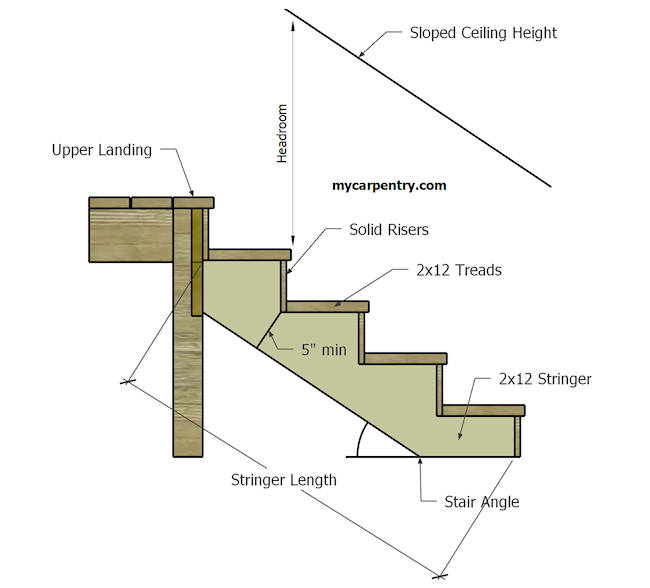
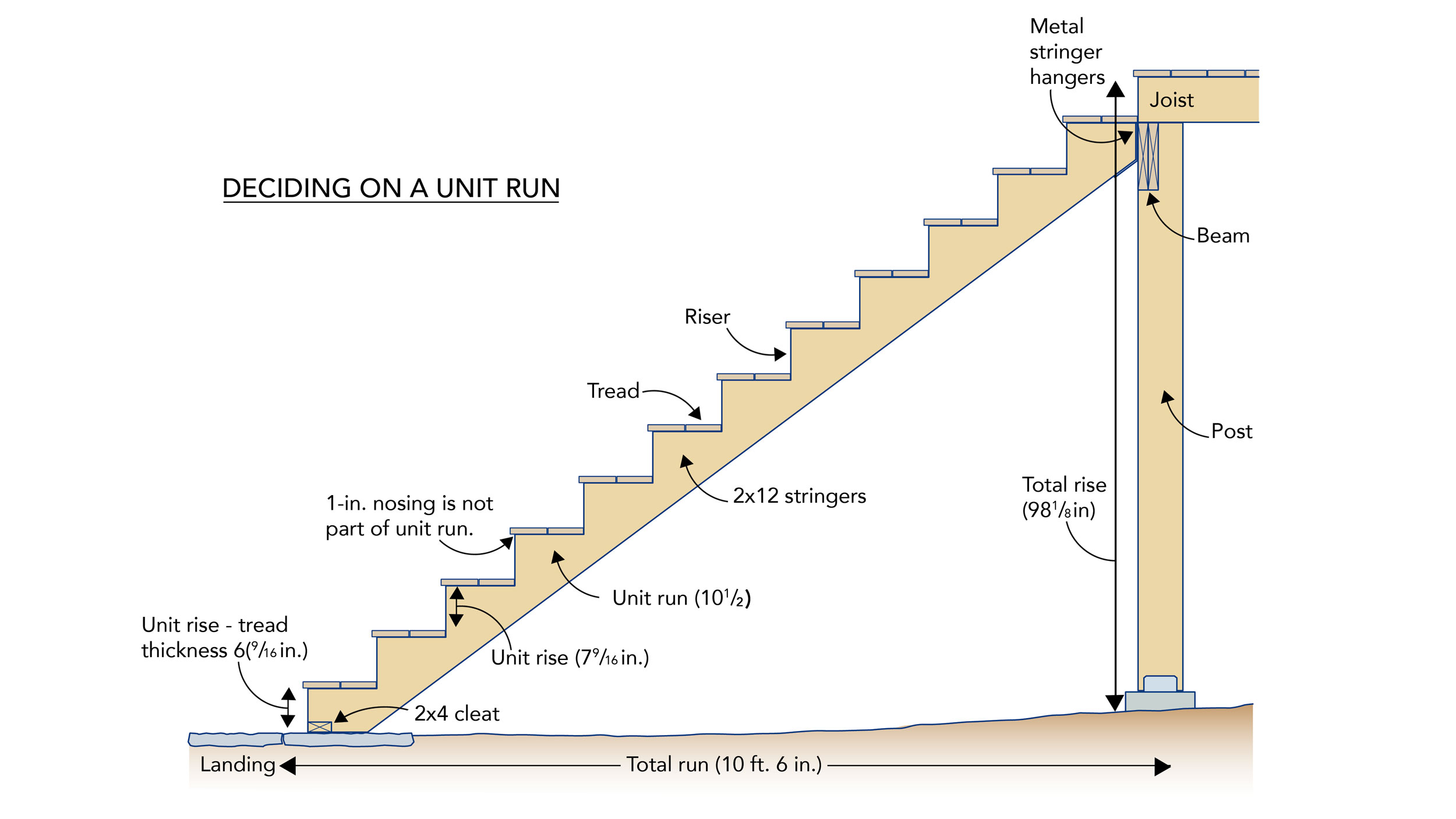
- Rise → Vertical height
- Run → Horizontal depth
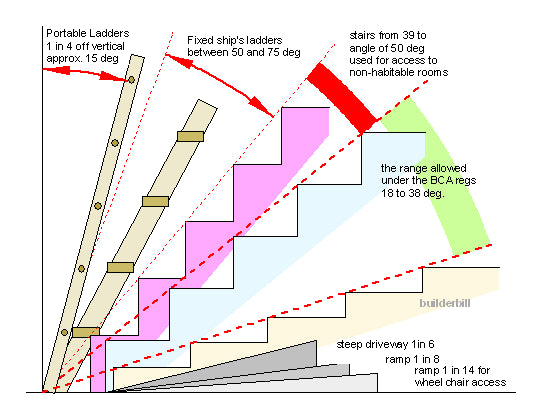
- Angle → Slope between rise and run
- Stringer → Diagonal structural support
How to Use the Stair Angle Calculator
Step 1: Choose What to Calculate
Select:
- Stair Angle
- Total Rise
- Total Run
Step 2: Enter Known Values
You can input measurements in:
- Inches
- Feet
- Centimeters
- Meters
The calculator automatically converts everything internally to inches for accuracy.
Step 3: Enter Number of Steps (Optional)
If left blank, the calculator estimates steps using a typical 7–7.5 inch rise per step.
Step 4: Click “Calculate”
You’ll instantly receive:
- Main calculated result
- Total rise & run
- Stringer length
- Rise per step
- Run per step
- Compliance check
- Comfort rating
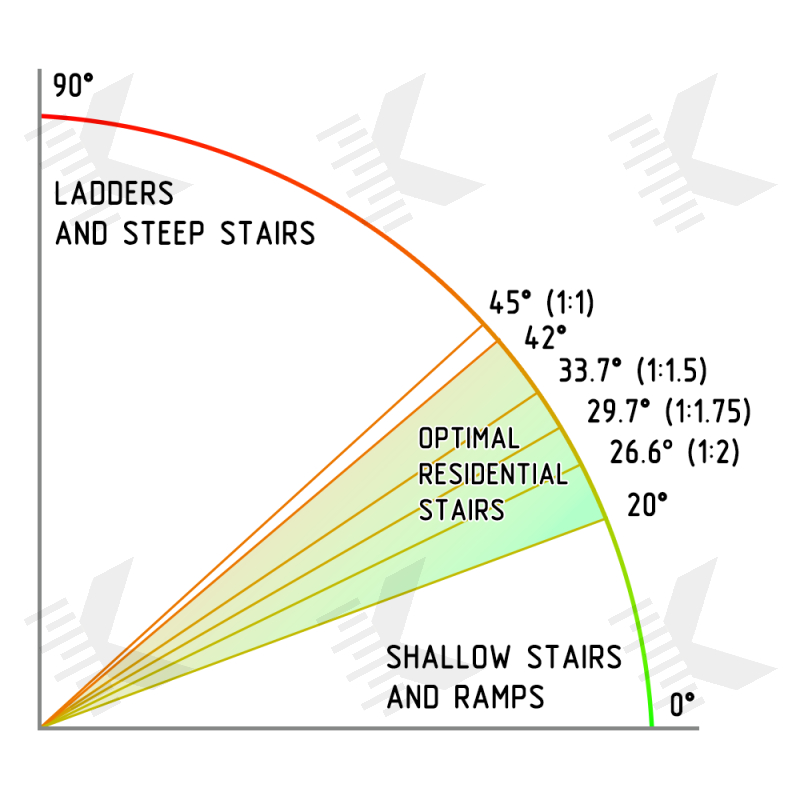
Ideal Stair Angle Range
Recommended Residential Stair Angles
4
| Angle Range | Classification |
|---|---|
| Below 20° | Too Shallow |
| 20–35° | Comfortable |
| 35–45° | Standard |
| Above 45° | Too Steep |
Most residential stairs fall between 30° and 37° for optimal safety and comfort.
Building Code Compliance (General Guidelines)
While local codes vary, standard residential recommendations typically include:
- Rise per step: 4″ to 7.75″
- Run per step: Minimum 10″
- Ideal angle: 30°–35°
The calculator checks whether your design meets these general safety thresholds.
⚠ Always verify with your local building authority before construction.
Comfort Level Explained
The calculator rates comfort based on:
- Angle between 30°–35°
- Rise per step between 6.5″–7.5″
Ratings include:
- Optimal
- Comfortable
- Less Comfortable
This helps you balance space efficiency and walking comfort.
Example Calculation
Suppose you have:
- Total Rise: 108 inches (9 feet)
- Total Run: 120 inches
- Steps: 14
Results:
- Stair Angle: ~42°
- Rise per step: ~7.7″
- Run per step: ~8.6″
- Stringer length: ~161 inches
- Compliance: Possibly non-compliant (run too short)
This indicates the staircase may be too steep for residential comfort.
Why Stair Angle Matters
✔ Safety – Reduces fall risk
✔ Comfort – Easier ascent and descent
✔ Code compliance – Avoid inspection failures
✔ Structural accuracy – Proper stringer cutting
✔ Space optimization – Fit stairs into limited layouts
Too steep = difficult and unsafe
Too shallow = takes excessive floor space
Finding the right balance is essential.
When to Use This Calculator
- Home renovations
- Basement finishing projects
- Deck stair construction
- Loft access stairs
- Garage or shop builds
- Tiny home construction
Frequently Asked Questions
1. What is a good stair angle?
Most residential stairs are between 30° and 37°.
2. What is the ideal rise per step?
Between 6.5″ and 7.5″ is considered most comfortable.
3. What is the minimum stair run?
Typically at least 10 inches per step.
4. What happens if stairs are too steep?
They become unsafe and may violate building codes.
5. Can I use metric units?
Yes. The calculator converts centimeters and meters automatically.
6. What is a stringer?
The diagonal structural support board that holds stair treads.
7. How is stringer length calculated?
Using the Pythagorean theorem.
8. What if I don’t know the number of steps?
The calculator estimates it based on typical rise height.
9. Does this replace building code approval?
No. Always verify with local authorities.
10. Is 45° too steep?
For residential stairs, generally yes.
11. What angle is safest?
Around 30°–35° for most homes.
12. Why is run important?
Short runs create steep, unsafe stairs.
13. Can this be used for commercial stairs?
Use with caution—commercial codes may differ.
14. How accurate is it?
It uses precise trigonometric formulas.
15. Can I calculate rise or run instead?
Yes — simply select the calculation type.
Final Thoughts
Proper stair design is a balance between:
- Space constraints
- Safety
- Comfort
- Code requirements
Our Stair Angle Calculator gives you instant, accurate results for planning and construction — helping you build stairs that are safe, comfortable, and structurally sound.
Use it before cutting your stringers and avoid costly mistakes.