
Implicit Differentiation Calculator
Understanding derivatives is essential in calculus, especially when dealing with equations where y is not explicitly written as a function of x. That’s where implicit differentiation comes in.
Our Implicit Differentiation Calculator is a powerful online tool that helps you compute:
- The derivative formula (dy/dx)
- The slope at a specific point
- The slope angle in degrees
- The equation display with selected parameters
It supports several important curve types, including:
- Circle
- Ellipse
- Hyperbola
- Folium
Whether you’re a high school student, college learner, or math enthusiast, this tool simplifies complex derivative calculations in seconds.
What Is Implicit Differentiation?
In calculus, implicit differentiation is used when a function is not written in the standard form:y=f(x)
Instead, the relationship between x and y is written in a combined form, such as:x2+y2=r2
Here, y is not isolated. To find dy/dx, we differentiate both sides with respect to x and apply the chain rule.
This calculator automates that entire process for selected curve types.
Supported Equation Types
Our tool supports four important mathematical curves:
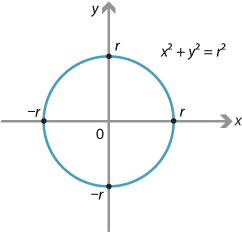
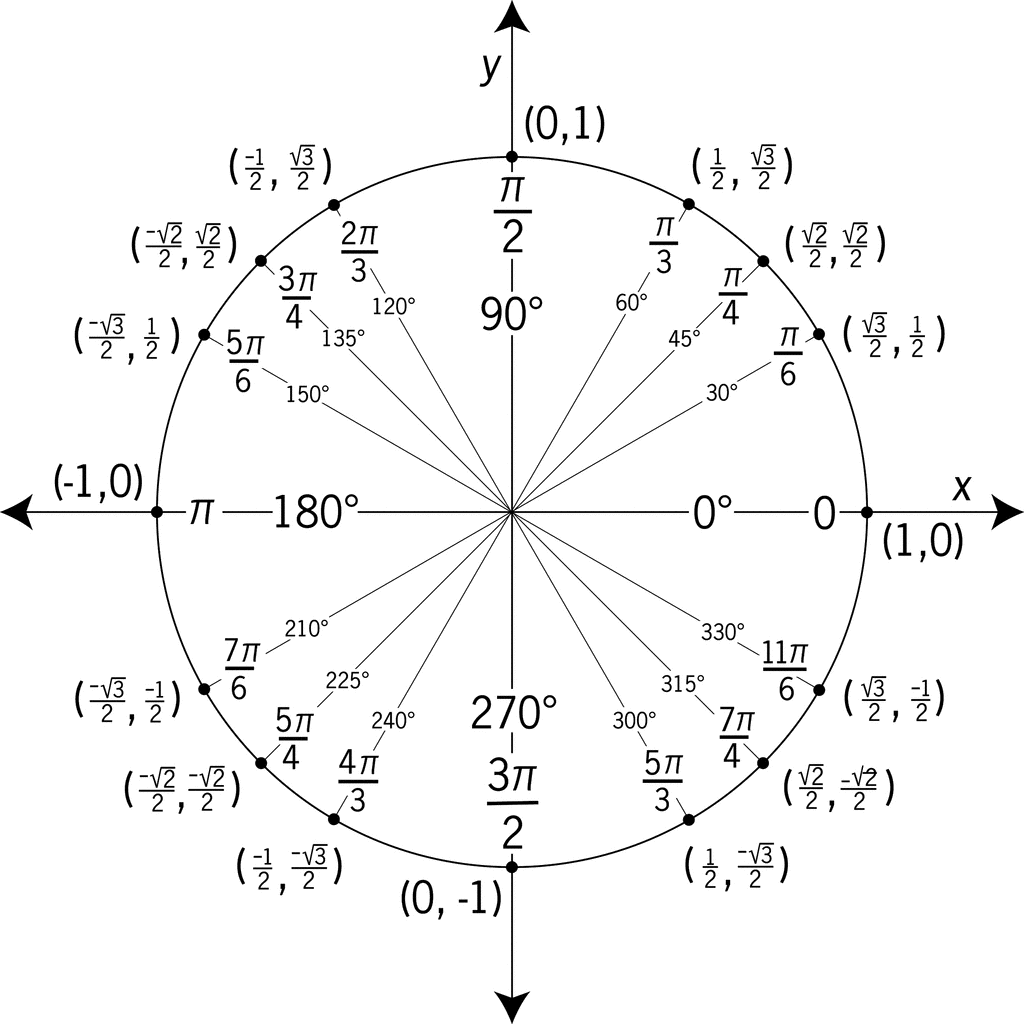
1. Circle: x2+y2=r2

4
Derivative Formula:dxdy=−yx
This means the slope of the tangent line at any point depends directly on the ratio of x and y coordinates.
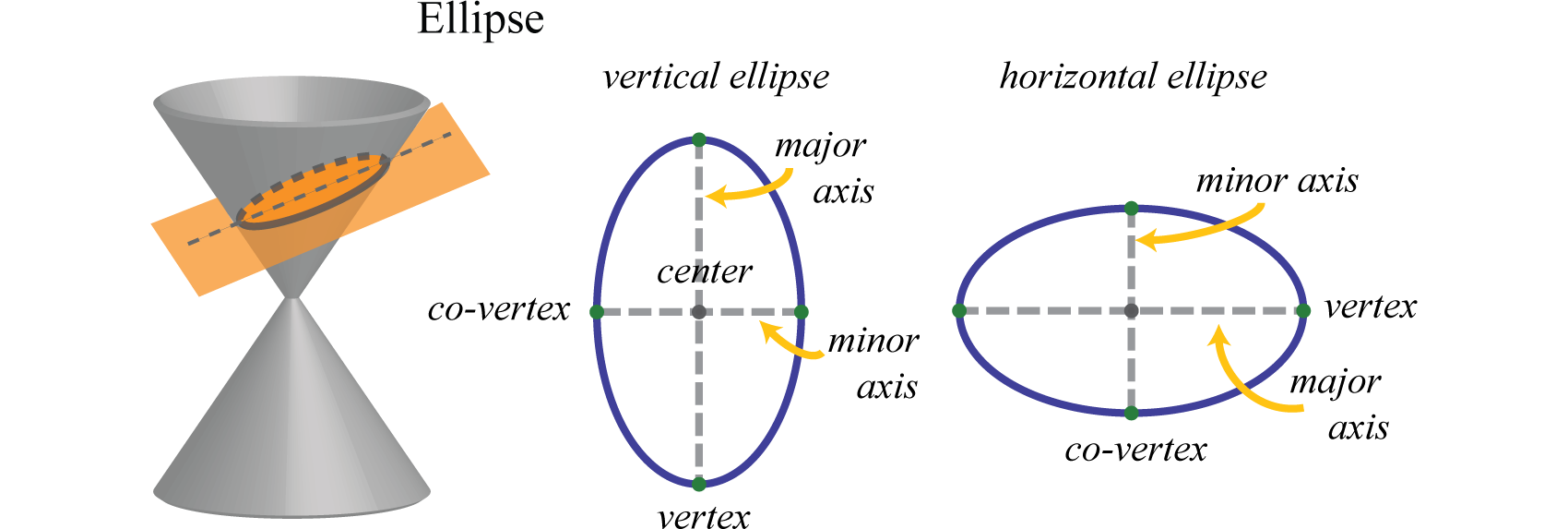
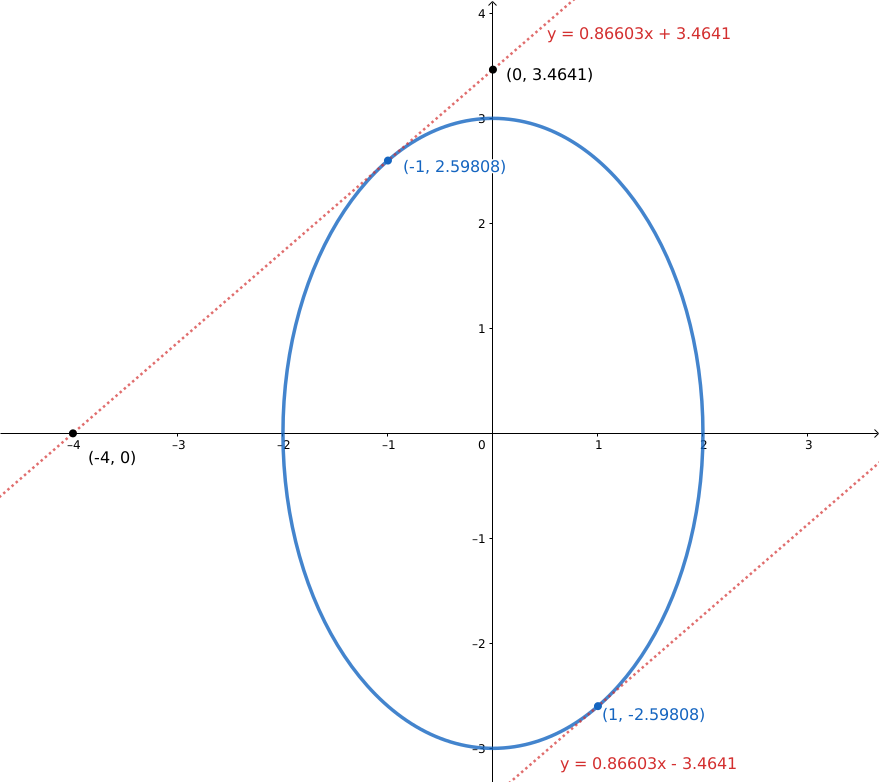
2. Ellipse: x2/a2+y2/b2=1

4
Derivative Formula:dxdy=−a2yb2x
Ellipses stretch differently along x and y axes depending on parameters a and b.
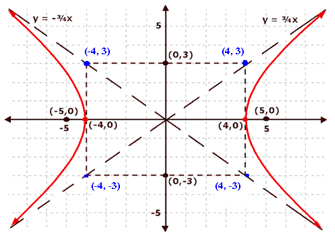
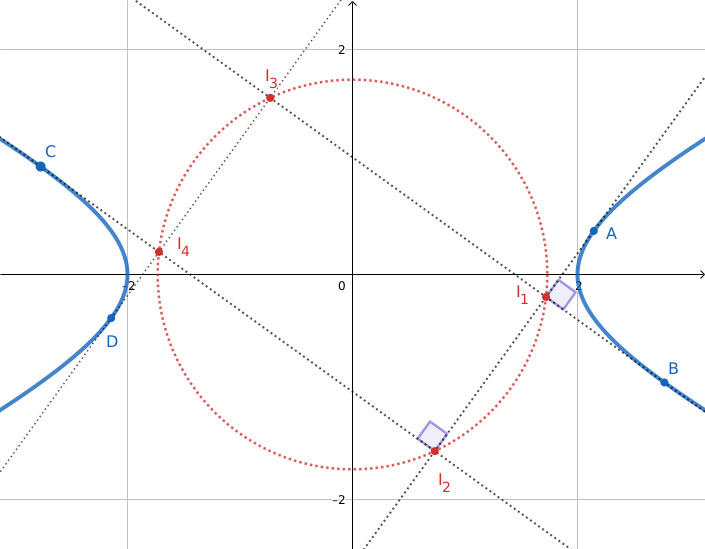
3. Hyperbola: x2/a2−y2/b2=1

4
Derivative Formula:dxdy=a2yb2x
Notice the sign difference compared to the ellipse.
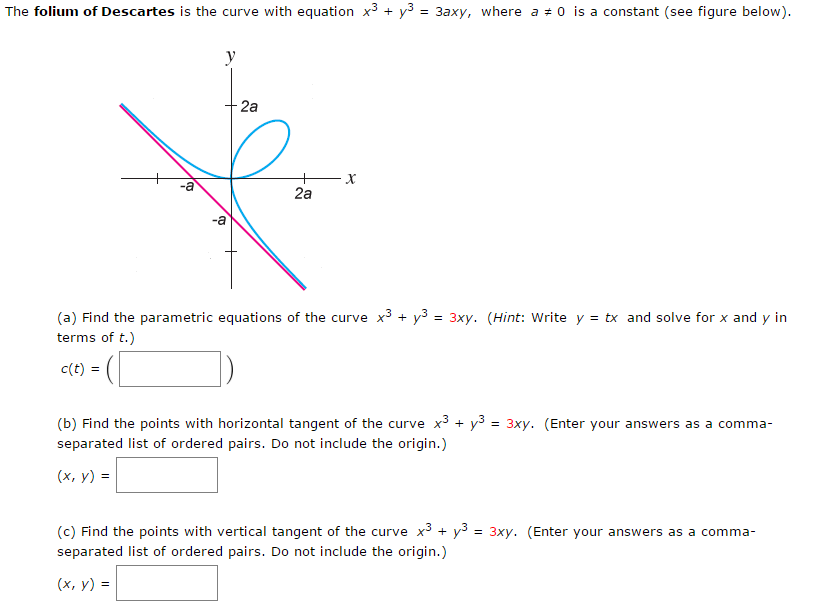
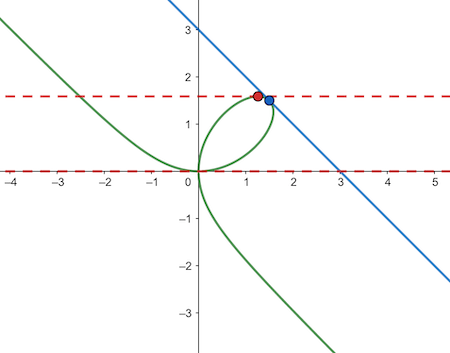
4. Folium: x3+y3=3axy

4
Derivative Formula:dxdy=y2−axay−x2
This curve creates a loop-like structure and has more complex derivative behavior.
How to Use the Implicit Differentiation Calculator
Using the calculator is straightforward:
Step 1: Select Equation Type
Choose from:
- Circle
- Ellipse
- Hyperbola
- Folium
Step 2: Enter x and y Values
Input the coordinates of the point where you want to calculate the slope.
Step 3: Enter Parameter Values
- For Circle → enter radius (r)
- For Ellipse → enter a and b
- For Hyperbola → enter a and b
- For Folium → enter parameter a
Step 4: Click Calculate
The calculator instantly displays:
- The equation
- The dy/dx formula
- The derivative value at the chosen point
- The slope angle (in degrees)
Example Calculation (Circle)
Let’s calculate the slope of a circle at a specific point.
Given:
- Equation: x2+y2=25
- Point: (3, 4)
Using the formula:dxdy=−yxdxdy=−43=−0.75
The calculator also converts this into a slope angle using:θ=tan−1(dy/dx)
This gives the tangent angle in degrees.
What Is the Slope Angle?
The slope angle represents the angle between the tangent line and the positive x-axis.
The calculator computes:θ=arctan(dy/dx)
This is extremely helpful in:
- Physics (motion direction)
- Engineering (curve slopes)
- Optimization problems
- Geometry analysis
Why Use This Implicit Differentiation Calculator?
✔️ Instant dy/dx calculation
✔️ Shows derivative formula clearly
✔️ Computes slope angle automatically
✔️ Supports multiple conic sections
✔️ User-friendly interface
✔️ Ideal for students and teachers
✔️ Free and accessible anytime
Instead of manually applying the chain rule and simplifying equations, this tool does everything instantly and accurately.
When Is Implicit Differentiation Used?
Implicit differentiation is widely used in:
- Related rates problems
- Tangent line calculations
- Optimization problems
- Engineering curve analysis
- Physics motion equations
- Multivariable calculus foundations
It’s a core concept in Calculus I and Calculus II courses.
Common Mistakes in Implicit Differentiation
- Forgetting to apply the chain rule
- Missing dy/dx when differentiating y terms
- Algebra errors during simplification
- Division by zero when y = 0
- Ignoring domain restrictions
This calculator helps avoid those mistakes by automating the process.
Frequently Asked Questions (FAQs)
1. What is implicit differentiation?
It’s a method used when y is not written explicitly as a function of x.
2. What does dy/dx represent?
It represents the slope of the curve at a specific point.
3. Why can’t y be zero in some calculations?
Because division by zero is undefined.
4. What is the slope angle?
It’s the angle between the tangent line and the x-axis.
5. Can I use this for homework?
Yes, it’s perfect for checking your answers.
6. Does it show the derivative formula?
Yes, it displays the formula clearly.
7. Is this suitable for college students?
Absolutely.
8. What is a folium curve?
A cubic curve defined by x3+y3=3axy.
9. Can the calculator handle symbolic algebra?
It calculates numeric results at specific points.
10. What happens if the denominator becomes zero?
The calculator alerts you to prevent invalid results.
11. Is this tool free?
Yes, completely free.
12. Can teachers use this in class?
Yes, it’s helpful for demonstrations.
13. Does it calculate second derivatives?
No, it focuses on first derivatives.
14. Is this good for exam preparation?
Yes, it helps verify derivative computations.
15. Does it work on mobile devices?
Yes, it’s responsive and easy to use on any device.
Final Thoughts
Implicit differentiation can feel challenging at first, especially when dealing with conic sections and nonlinear curves. But with our Implicit Differentiation Calculator, you can instantly compute dy/dx, slope values, and tangent angles with accuracy and confidence.
Whether you’re studying calculus or teaching advanced mathematics, this tool makes complex derivative calculations simple and accessible. Try it today and simplify your calculus learning experience!